
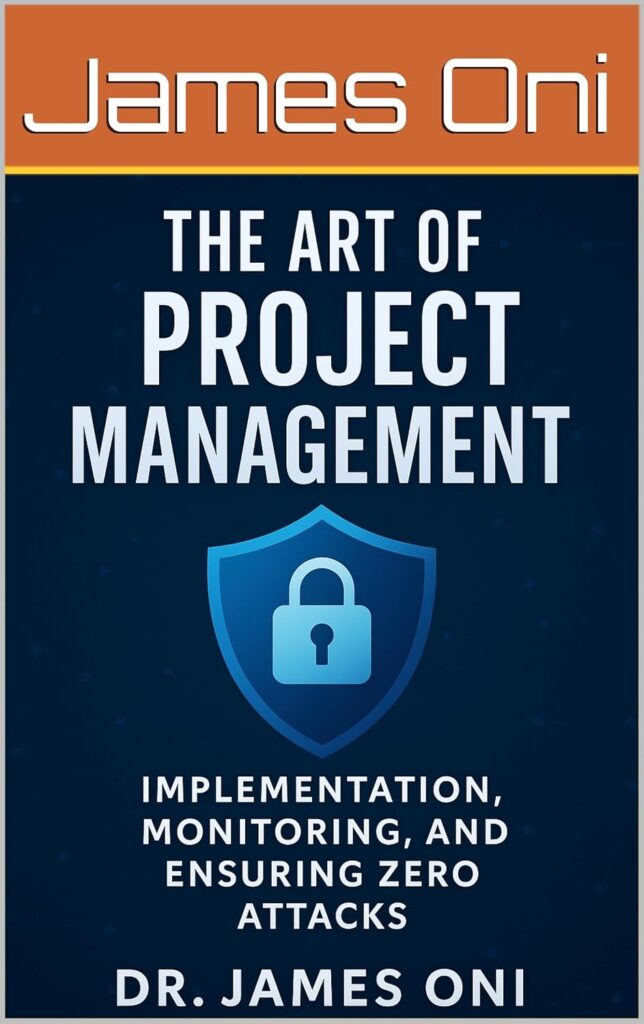
Implementation, Monitoring, and Ensuring Zero Attacks – A Narrative
Cybersecurity today is more than the deployment of firewalls, encryption, and controls—it is the disciplined implementation of projects that transform entire organizations. Yet implementation alone is not enough. Without continuous monitoring, success is invisible and vulnerabilities grow unchecked. And without an ultimate assurance objective, organizations risk chasing compliance checklists instead of building true resilience.
This book is built on three interdependent pillars:
Implementation: Turning Strategy into Secure Reality
Implementation is where vision becomes tangible. A Zero Trust architecture, an IAM system, a SOC, or a cloud migration project is not secured by intentions, but by the rigor of its project management.
- Clear charters establish scope, risk, and KPIs.
- Work Breakdown Structures (WBS) map IAM, SOC, or endpoint rollouts.
- Stage-gates and Agile sprints ensure delivery momentum.
Every cybersecurity program—whether in healthcare, finance, energy, or defense—succeeds or fails in its implementation discipline. It is where governance meets execution.
Monitoring: Measuring What Matters
Cybersecurity cannot be managed in the dark. Leaders must see what is working, what is failing, and where the next threat is emerging. Monitoring provides the heartbeat of security projects:
- KPIs (uptime, adoption, compliance percentages).
- KRIs (threat levels, incident frequency, MTTD/MTTR).
- Dashboards that translate complex SOC data into executive decisions.
- Continuous Monitoring Frameworks (CMF) that turn audits into living assurance.
With the rise of AI-driven analytics, monitoring has moved from reporting the past to predicting the future—flagging vulnerabilities before they become incidents.
Ensuring Zero Attacks: From Philosophy to Framework
The aspiration of Zero Attacks may sound idealistic, but it is a strategic north star for organizations that can no longer afford compromise. Zero Attacks is not about eliminating every vulnerability—it is about achieving a state of resilient assurance where:
- Threat intelligence is embedded into every project lifecycle.
- Red Teaming, penetration testing, and adversarial simulations validate readiness.
- OCM ensures that people, not just systems, are secure.
- Closure of projects includes proof of resilience—not just delivery of technology.
The Zero-Attack Assurance Framework (ZAAF) defines this model, moving organizations along a maturity journey: Reactive → Preventive → Predictive → Resilient → Zero Attack.
The Integration of the Three Pillars
When implementation is executed with project rigor,
when monitoring transforms data into decisions,
and when assurance is framed as Zero Attacks,
an organization transcends compliance checklists and achieves true security leadership.
This triad—Implementation, Monitoring, and Zero Attack Assurance—is the art and science of cybersecurity project management. It is both a methodology and a mindset, one that empowers leaders to deliver not only secure systems, but also secure futures.
Key points
- Publication date: Oct 2, 2025
- Language: English
- Pages: 119